
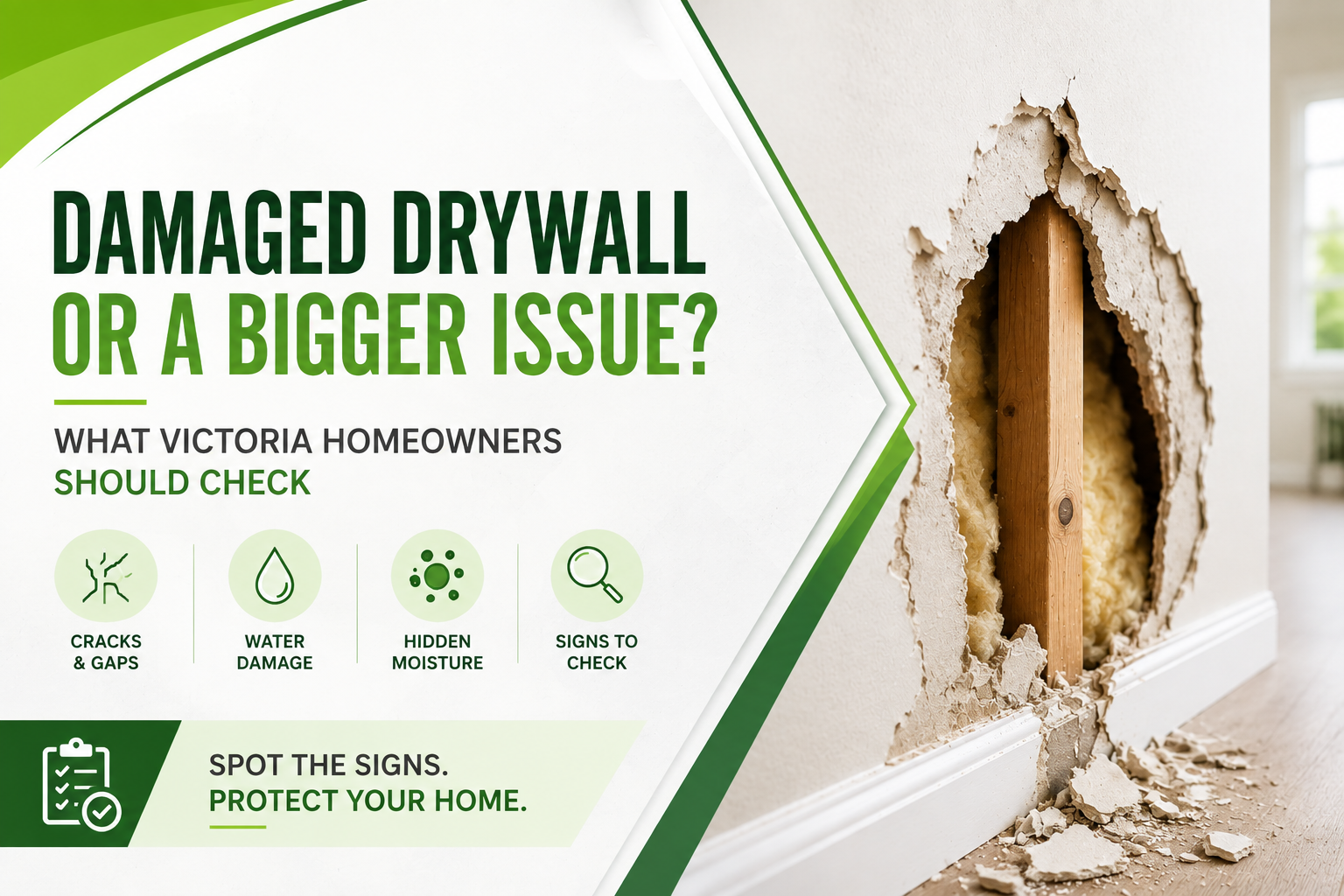
Drywall damage can range from a small nail hole to major ceiling deterioration caused by moisture. Before any patching, sanding, or replacement begins, the condition of the wall or ceiling needs to be assessed carefully. A proper assessment helps determine whether the damaged section can be repaired or whether part of the drywall needs to be replaced.
For homeowners researching drywall installation services Victoria, understanding the assessment process is also useful because new drywall work and repair work share many of the same considerations. The condition of the framing, moisture exposure, surface finish, and intended use of the room can all affect the appropriate solution.
What Is Checked During a Drywall Assessment?
A drywall assessment begins with a visual inspection of the damaged area. The size, location, appearance, and surrounding condition are considered before deciding on a repair method.
Common signs that are examined include:
Holes and punctures
Dents and impact damage
Hairline or recurring cracks
Damaged seams and corners
Peeling or bubbling paint
Water stains
Soft or swollen drywall
Loose sections
Uneven surfaces
Previous repair patches
A small surface defect may require only filling and finishing, while a soft or heavily damaged section may need to be removed and replaced.
Identifying the Cause of the Damage
Repairing the visible problem without understanding its cause can result in the same issue returning. This is particularly important when the damage involves moisture.
For example, a brown or yellow stain on a ceiling could be associated with a plumbing leak, roof issue, condensation, or another source of moisture. Similarly, repeated cracking around a doorway or wall joint may require closer examination rather than another layer of compound.
The assessment should therefore consider what happened before the damage appeared. Information about previous leaks, renovations, plumbing work, electrical changes, or impact can help determine the correct repair approach.
How the Size of the Damage Affects the Repair
The dimensions of the damaged area are one of the first practical considerations.
Small holes and dents
Small holes from screws, nails, anchors, or minor impacts can often be repaired with patching compound or joint compound. The surface is prepared, filled, sanded, and finished before painting.
Medium-sized holes
A larger opening may require a drywall patch supported by appropriate backing. The edges need to be secured, taped, and covered with compound before sanding and finishing.
Large or deteriorated sections
When a significant portion of drywall is damaged, particularly after water exposure, replacement may make more sense than patching. The damaged section can be removed and replaced with new material before the joints are taped and finished.
The surrounding drywall also needs to be checked because damage can extend beyond what is immediately visible.
Checking for Moisture Damage
Moisture is one of the most important factors to identify before drywall repair. Drywall exposed to continuing moisture may swell, soften, stain, or lose its ability to hold a finished surface properly.
A professional assessment should look for:
Discolouration
Soft spots
Swelling
Peeling paint
Damp areas
Mould-related concerns
Recurring ceiling stains
Damaged insulation behind the drywall
The source of the moisture should be addressed before the affected drywall is refinished. Simply covering a stain with compound or paint does not resolve an active leak.
For homes in Victoria and other parts of British Columbia, moisture management is especially relevant when dealing with exterior walls, basements, bathrooms, kitchens, ceilings, and areas around windows.
Examining the Wall or Ceiling Structure
Drywall is attached to an underlying framing system, so the condition of that support can influence the repair.
During an assessment, it may be necessary to determine whether the framing is straight, secure, and suitable for the replacement material. If drywall has been removed because of water damage or renovation work, the exposed framing provides an opportunity to check the area before new panels are installed.
This is where repair work can overlap with drywall installation services Victoria. A replacement section needs to be installed securely and aligned with the existing surface so the finished wall does not develop noticeable ridges or uneven transitions.
Considering the Existing Finish
The existing wall finish also affects how a repair should be completed.
A smooth wall requires careful feathering and sanding so the repaired section blends with the surrounding surface. Textured walls require additional attention because a new texture pattern can stand out if it does not match the existing finish.
Paint colour and sheen matter as well. Even when a patch is perfectly smooth, differences in paint can make the repair visible under natural light.
This is why drywall assessment should include the final appearance, not just the structural repair.
When Should Drywall Be Repaired or Replaced?
The decision between repair and replacement depends on the condition of the material.
Repair may be suitable when:
The damage is limited to a small area.
The drywall remains firm and intact.
There is no continuing moisture problem.
The surrounding surface is stable.
The existing finish can be matched.
Replacement may be more appropriate when:
The drywall is soft or swollen.
A large area has been damaged.
Water exposure has weakened the material.
Multiple repairs are concentrated in one section.
The drywall has been removed during renovation.
The existing material cannot provide a suitable finished surface.
Experienced expert drywalling contractors can assess these factors and determine the appropriate scope of work rather than treating every damaged area in the same way.
Drywall Assessment During Renovation Projects
Renovation work can reveal problems that were not visible before walls were opened. This is common during basement renovations, room remodeling, insulation work, plumbing changes, and electrical upgrades.
Victoria homeowners working on older properties may also encounter several layers of previous repairs, outdated finishes, or damaged sections hidden behind fixtures and wall coverings.
Before new drywall is installed, the exposed area can be checked for framing, insulation, wiring, plumbing, and moisture concerns. This preparation helps establish a suitable surface for the next stage of construction.
For secondary-suite or other renovation projects, drywall assemblies can also have fire-separation requirements. British Columbia's current building-code guidance establishes minimum requirements for safety, fire protection, accessibility, and building performance, while specific projects may have additional requirements.
Why Professional Assessment Can Matter
Some drywall problems are straightforward, but others can involve issues that are not visible from the surface. A recurring crack, water stain, soft ceiling, or large opening may require more investigation before repair begins.
Professional drywall contractors can assess:
The type of damage.
The likely cause.
The condition of surrounding drywall.
Moisture-related concerns.
The underlying framing.
The required repair or replacement method.
The existing texture and finish.
Whether painting or related renovation work is needed afterward.
For commercial properties, the assessment may also need to consider project scheduling, multiple damaged areas, tenant requirements, and the coordination of other trades.
Frequently Asked Questions
What is included in drywall repair Victoria?
Drywall repair Victoria can include fixing holes, dents, cracks, damaged seams, ceiling damage, water-affected areas, and sections that need replacement. The scope depends on the size and cause of the damage.
How to fix dent in drywall?
A small dent can generally be prepared by removing loose material, applying suitable joint compound, allowing it to dry, sanding the area, and repeating the finishing process as needed. Larger dents may require a patch if the drywall surface or core is damaged.
How to fix small cracks in drywall?
Small cracks should first be examined to determine whether they are limited to the surface or associated with a joint or movement. Loose material can be removed before applying suitable compound and finishing the area. A crack that repeatedly returns should be assessed rather than repeatedly covered.
What is drywall texturing?
Drywall texturing is the process of applying a patterned or textured finish to a wall or ceiling. The technique depends on the existing surface and the desired appearance. When repairing textured drywall, matching the surrounding pattern is important for a consistent result.
Conclusion
A successful drywall repair starts with understanding the damage rather than immediately covering it. The size of the problem, moisture exposure, underlying framing, existing finish, and intended use of the space all influence the appropriate repair method.
For homeowners and property managers researching drywall services in Victoria, an accurate assessment can help determine whether a section needs patching, finishing, or complete replacement. Hefty Construction LTD provides drywall and related interior construction services for residential and commercial projects in Victoria, BC, including installation, repairs, taping, finishing, and renovation-related work.




Write a comment ...